Why We Make Things That Might Fail
A reflection on imperfection, doubt and resistance
We are told to make work that behaves, that profits, that fits into grids and timelines and expectations. We are promised freedom through high performance and engagement, while quietly being instructed on how to see, what to value, and when to stop.
The unprogrammed moment. The thing that fails and somehow tells the truth more clearly than the perfect one. Could it be the door to something else?
I believe in the beauty of the error, not as laziness or refusal to learn, but as a conscious embrace of imperfection in a world that demands polish while tightening its grip on how everything (and everyone) must look like.
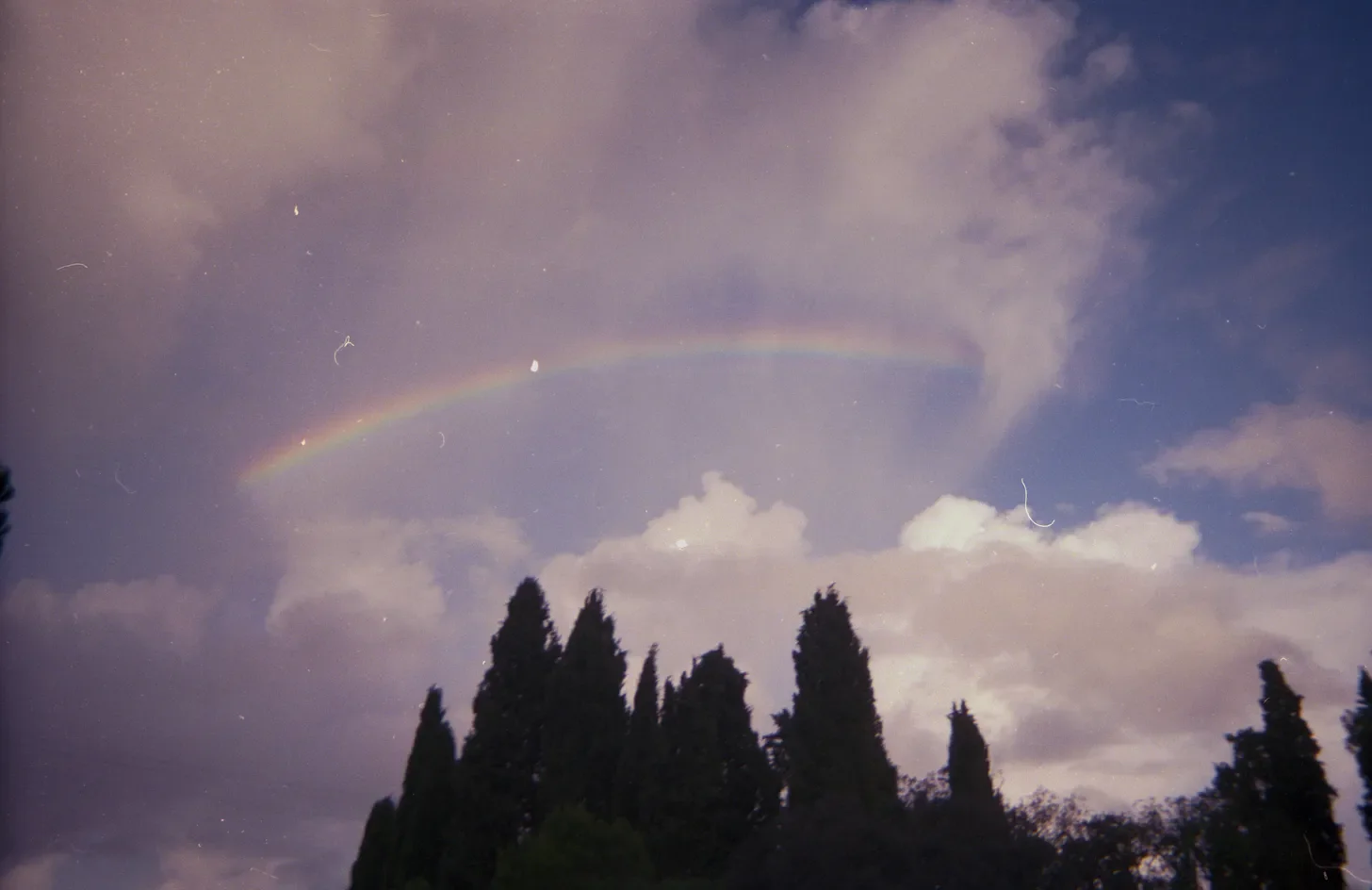
Photography taught me this early: the light leak, the film dust and scratches, the out-of-focus: they are not always mistakes to erase or add to the pile of rejects, but signs that point to a different perspective, to look in a different angle, the beauty in the flaw.
Most artists I know are not idle dreamers. They are hard workers. They carry double jobs, borrowed time, tired bodies. Art happens in the margins, late at night, between shifts, on stolen weekends. Sometimes it doesn’t happen at all. Exhaustion wins. Procrastination creeps in. And with it comes the daily question: why am I doing this? What’s the point?
That question lingers. There isn’t always a clean answer. Just a quiet disquiet that sits beside you while you work, or while you don’t.
Making photography or any visual art today means navigating a saturated visual world, where images stack endlessly, attention becomes increasingly scarce, and art seems fated to be scrolled past among layers of paracetamol-like content.
Self-promotion often feels like a strange, almost shameful form of labor. It’s uncomfortable, exposed, and requires a kind of courage to be comfortable to be dismissed. When your network is still fragile, when visibility hasn’t settled yet, it can feel like shouting into a void. Maybe it’s impostor syndrome, maybe it’s just clarity: the understanding that showing your work is as vulnerable as making it.
In the House of Disquiet, our small press, we keep making physical things: photo books, prints, posters, music cassettes, apparel, patches, and stickers. Not because it’s efficient, but because it’s tangible. Because it reminds us that we can still shape something with our hands.
We don’t create under ideal conditions. Support is uneven, delayed, or absent. Still, we continue not out of stubbornness, but because we don’t know another way to exist honestly. Making art is not a guarantee, not a career plan, not a performance. It’s a way of staying awake, an act of quiet resistance. That creation doesn’t have to be optimized to be valid, we keep reminding ourselves.
Our lives are shaped by the actions we take, and by the ones we abandon out of fear, fatigue, or waiting for permission. Errors included. Especially them.
So we choose to keep making things that might fail. To trust the imperfect, the unprogrammed, the unfinished. Not because it’s easy, but because it’s real.
In January 2026, we will start by kicking off our first project, an A3 Risograph Poster inspired by vanitas still life paintings.
It will be available soon at https://www.houseofdisquiet.com/
So keep making your work.
Through bad luck, low odds, uneven support, and the noise of comparison.
Make it without guarantees, without permission, without waiting for recognition. Make it a form of resistance, but also as a place of peace, a way to stay intact in a world that constantly asks you to fragment yourself.
If you don’t make the work only you can make, no one else will. You are not interchangeable. You are not a product to be replaced, optimized, or outsourced.
Keep going because making art is how you remember who you are.
Author: Vanessa V.
Originally publish on January 14, 2026, on Expired Frequencies Substack (Part of House of Disquiet)